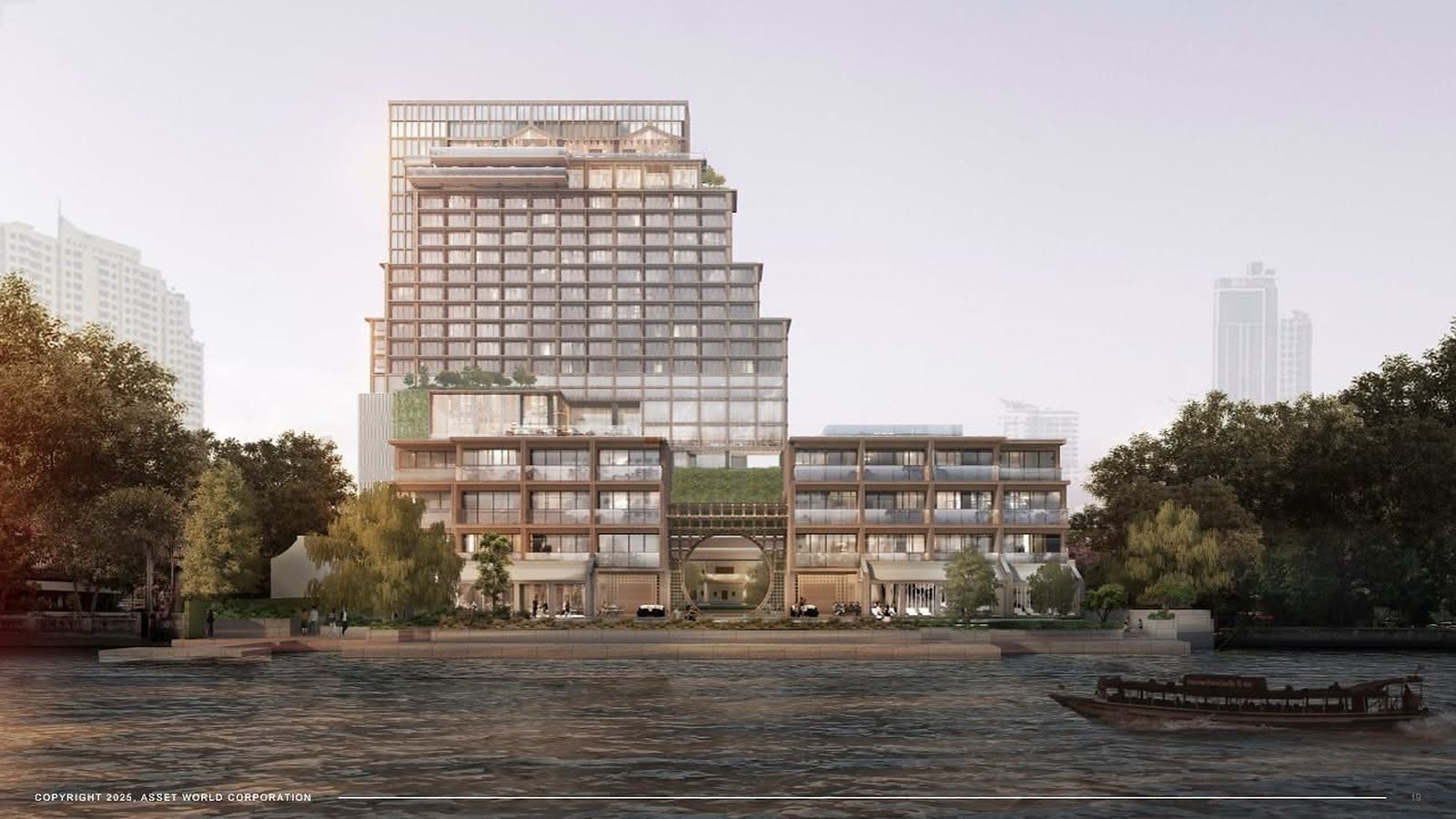
The Ritz-Carlton Bangkok, The Riverside is a Ritz-Carlton hotel being developed by Asset World Corporation with Marriott International on both banks of the Chao Phraya River: 192 keys in AWC’s latest count, in a new 20-storey tower and restored heritage buildings at The Lhong 1919 and a shophouse at Song Wat, with opening targeted for 2028. The river, not a road, is what joins the two halves.
Update, 22 October 2026: AWC’s own figures have moved since the 2022 signing this piece first followed. Its release of 9 June 2025 gives 192 keys rather than 166 and no longer names The Mansion-SongWad, and its release of 11 August 2026 still gives 2028 for the opening. Neither mentions residences.
- 192
- keysAWC's count of 9 June 2025, up from 166 in the 2022 plan.
- 20
- storeys in the new towerAt The Lhong 1919, beside two restored buildings.
- 2028
- opening targetRepeated by AWC on 11 August 2026.
A hotel on two banks
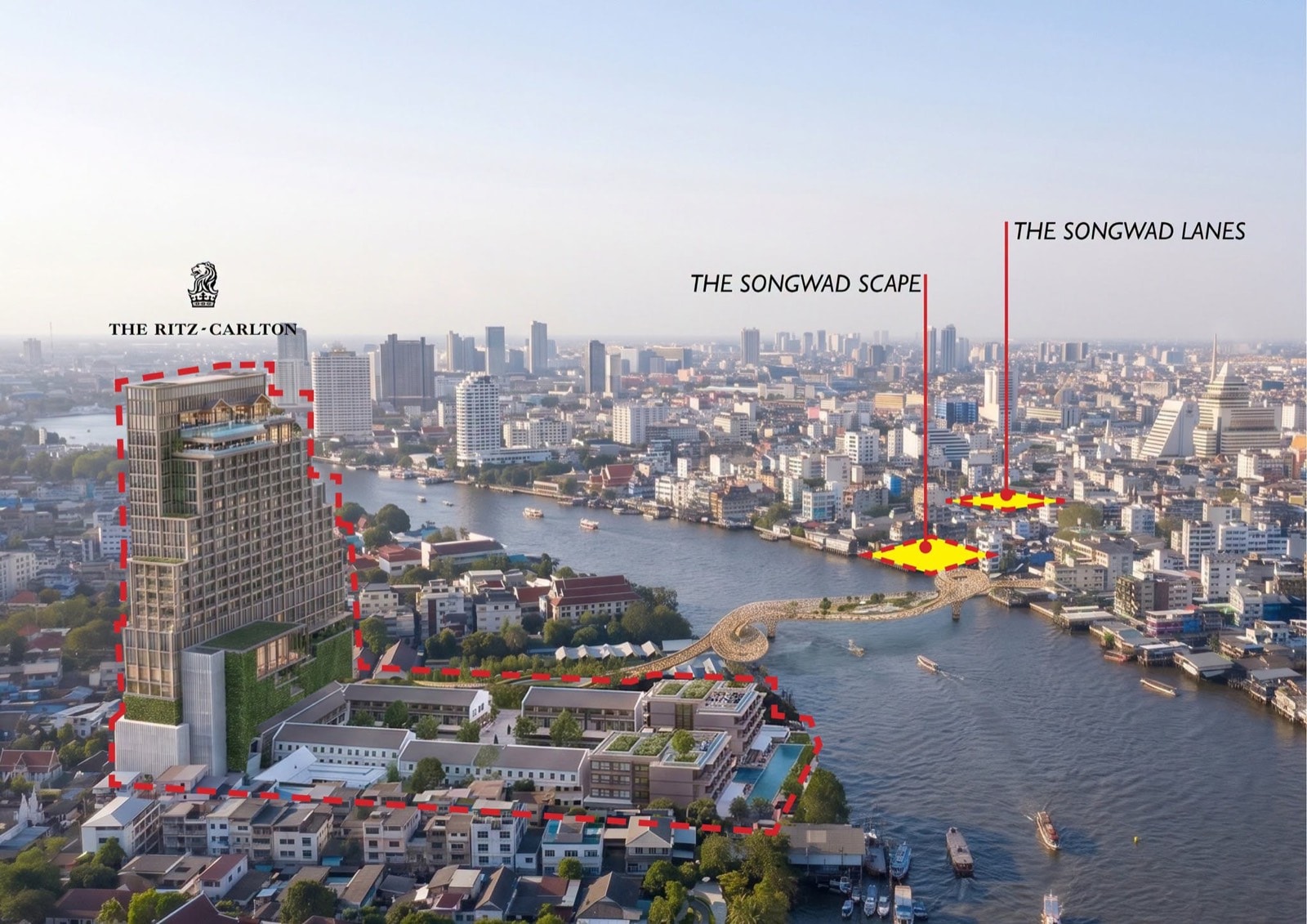
- 168 keys at The Lhong 1919 Riverside Heritage Destination, on the Charoen Nakhon bank: a new 20-storey tower and two restored buildings
- The rest of the 192 at the Song Wat Shophouse, across the river
- The 2022 plan had 166 keys over three sites, including The Mansion-SongWad, which AWC’s 2025 release no longer names
AWC’s 2022 plan linked the sites by a dedicated shuttle boat rather than a road, and its 2025 release still sells the stay as a river journey. That makes the river the corridor of the hotel, which is how this stretch of Bangkok worked for a century before roads arrived.
What is being preserved
Existing heritage buildings are being kept rather than cleared, which is rare on this river.
Read the full explanation
The Lhong 1919 is a nineteenth-century Thai-Chinese river port compound, built around a courtyard and a shrine to Mazu, the sea goddess. AWC has said the existing buildings and the shrine are being kept. The design idea is stated as Yin and Yang: the stillness and heritage architecture of The Lhong 1919 on one bank, answered by the working street life of Song Wat on the other.
Song Wat is one of the oldest commercial streets in Bangkok, a row of trading shophouses along the river edge of Chinatown that has in the last few years become one of the city’s better neighbourhoods for coffee, small galleries and independent kitchens without being rebuilt.
The two projects around it
It does not stand alone. Two more schemes share the stretch.
Read the full explanation
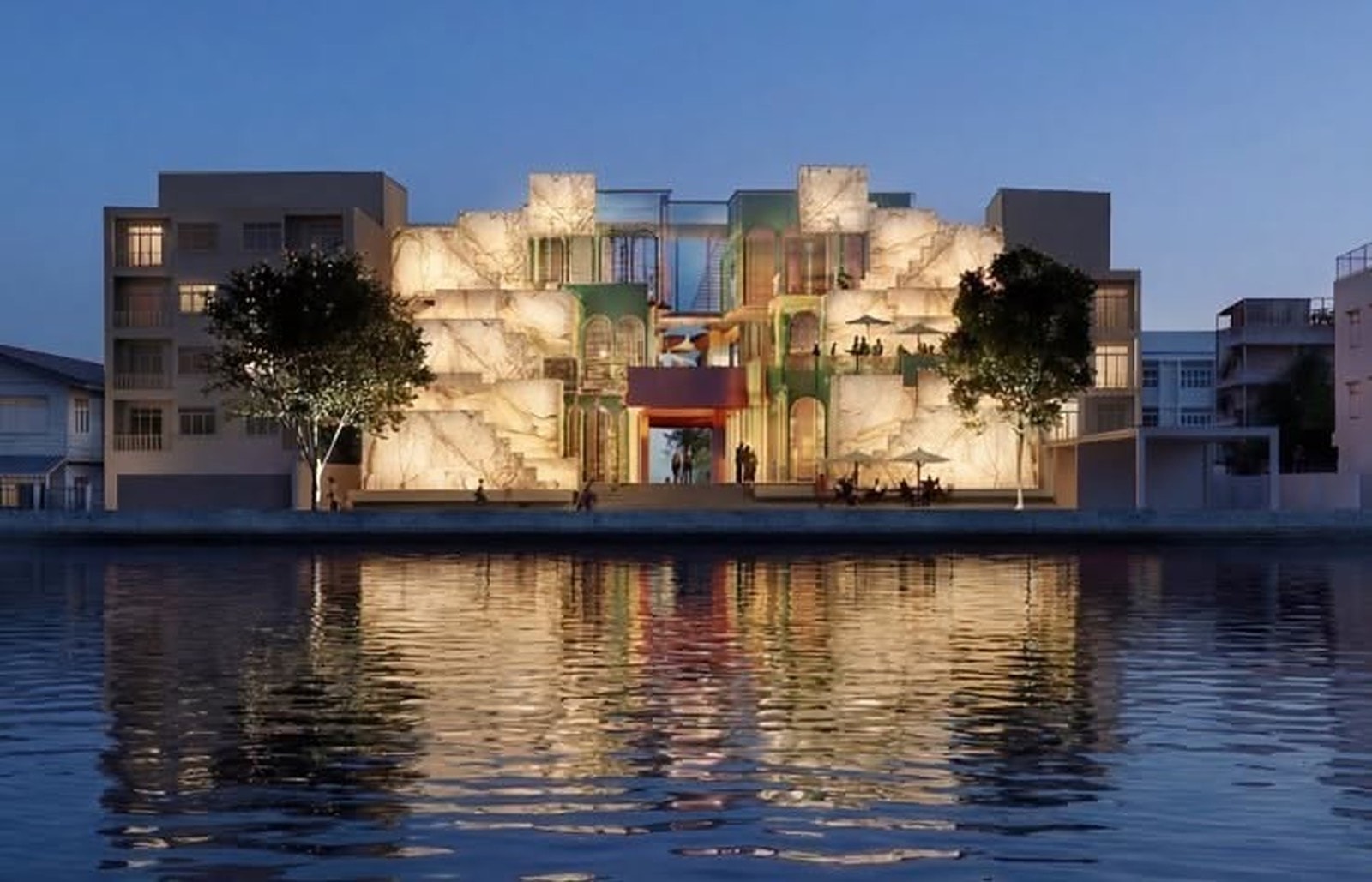
AWC has announced two further schemes on the Song Wat side. The Songwad Scape is a mixed-use destination described as gallery, retail, cafe and riverside terrace space with a cultural programme. The Songwad Lanes is a conservation project restoring the old shophouse rows into cultural and commercial use. A pedestrian bridge across the Chao Phraya has also been discussed publicly.
Read together, this is not one hotel being inserted into a district. It is a district being assembled, which is the same pattern AWC has followed at Woeng Nakornkasem in Yaowaraj.
What about the residences
No homes have been announced here. We say so rather than implying otherwise.
Read the full explanation
AWC’s 2022 announcement said the development would include a luxury residence alongside the hotel. Its releases of June 2025 and August 2026 do not mention residences, and as of 22 October 2026 there is no published unit mix, no floor sizes, and no pricing or sales timetable. We are saying that plainly because a lot of what is currently written about “Ritz-Carlton residences Bangkok riverside” is invention. When AWC releases the numbers, they will appear here and on our branded residences register.
How the riverside prices against the park axis
The river asks less per square metre than the park does, and the reasons are structural.
Read the full explanation
The Chao Phraya is Bangkok’s second luxury axis, anchored by ICONSIAM, Four Seasons, Capella and The Peninsula. It sells space and river frontage, and it asks for patience on rail access. The park-axis corridors around Lumphini and Wireless Road sell the opposite: less space per baht, and a walk to everything.
Neither is the right answer in general. A buyer who wants a large lateral home with a view that will not be built out should look hard at the river. A buyer whose day involves offices, schools and hospitals should look at the park axis. What we will not do is tell you the one we happen to be selling is the one that suits you.
