Thailand offers a wide range of property types, and the words for them do not always mean what an overseas buyer expects. This is a plain guide to the main categories, from city condominiums to coastal villas, and to the furnishing levels you will see in listings, so you can read the market accurately before you start.
The word that trips most overseas buyers
Apartment
One landlord owns the building. You rent.
Condominium
Units are owned individually. You can buy.
Urban living: apartments, condominiums, and penthouses
- Apartments. In Thailand an apartment building is owned by a single landlord, and the units are leased to tenants. They are often furnished and tend to be more affordable, which suits short-term or budget-conscious renters. You rent an apartment; you do not buy one.
- Condominiums.A condominium is divided into individually owned units, so a buyer owns a specific home, with shared amenities such as gyms and pools. Layouts run from studios to multi-bedroom units. This is the type a foreign buyer can own outright, within the building’s foreign quota.
- Penthouses.Top-floor homes with larger layouts, longer views, and often private pools or terraces. They sit at the top of a condominium’s pricing.
Houses: detached, semi-detached, and duplex
- Detached houses. The most private option, typically with multiple bedrooms, large living areas, and a garden. They suit families wanting space and a private plot.
- Semi-detached houses. Two houses sharing one wall. Less common than fully detached homes, they trade a little privacy for a lower price.
- Duplexes. Two living units within one building, side by side or stacked, each with its own entrance. Useful for extended families or for buyers who want rental income from one half.
Townhomes
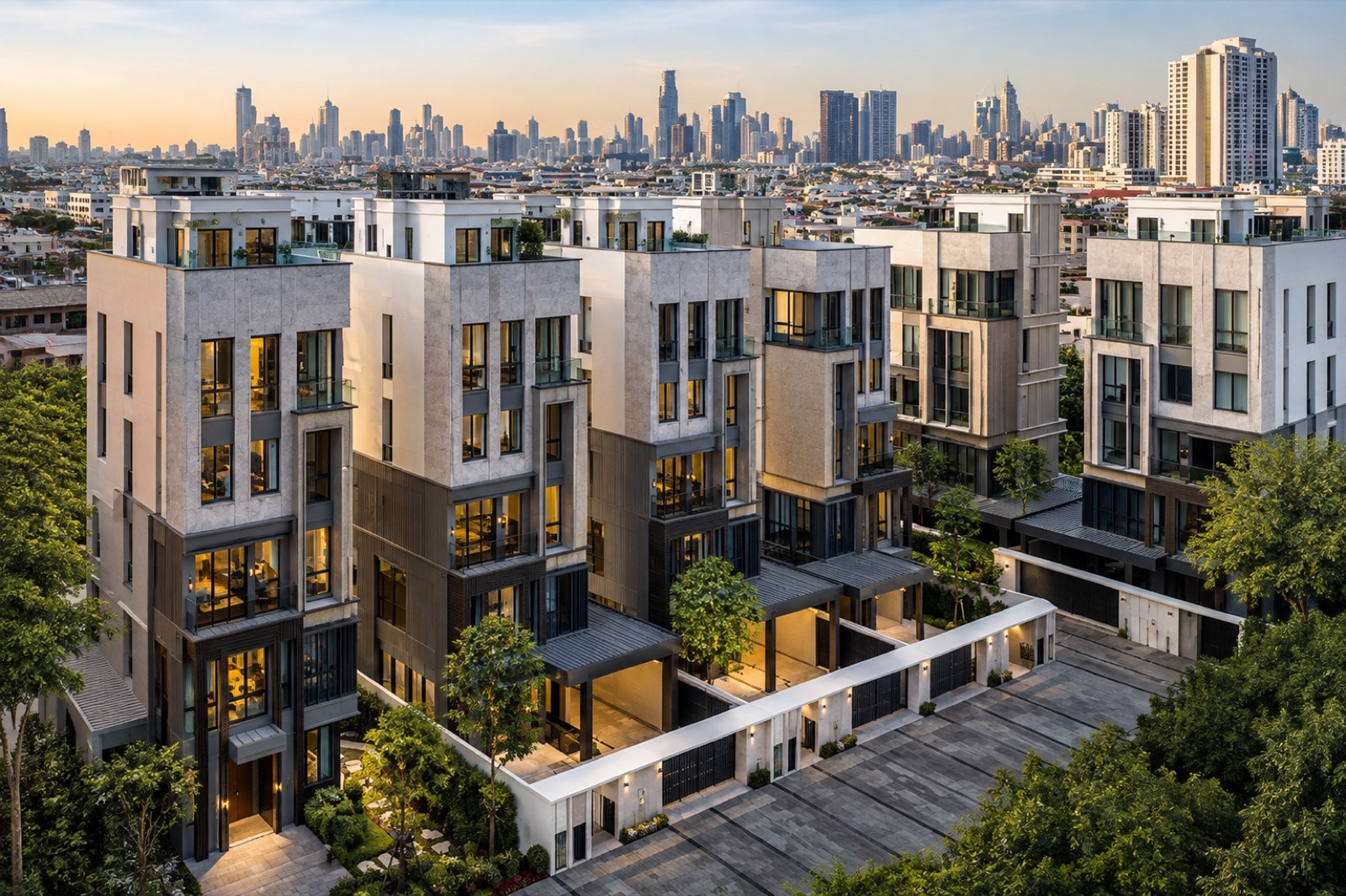
Townhomes are multi-level houses, usually two or three floors, on a smaller footprint than a detached house. Many sit in developments with shared amenities like a garden, pool, or gym. They blend the privacy of a house with the convenience of a central location, which suits young professionals and small families.
Villas
Villas are the high end of the landed market: spacious, with private gardens, pools, and outdoor living, found both in the city and in coastal locations such as Phuket and Koh Samui. The appeal is privacy and resort-style living on a single private plot.
Furnishing levels, from bare shell to fully furnished
Thai listings describe how finished a property is, and the levels matter to your budget and timeline:
- Bare shell. Structure and electrical points only. The buyer fits out everything, from the kitchen to the floors. Full control over the design, but a significant additional cost.
- Standard, or partially furnished. Basic systems such as plumbing and electricity are in place, with minimal furnishing. A balance of cost and convenience.
- Fully fitted, or mostly furnished. Key elements like kitchen counters and wardrobes are installed, saving time and money while leaving room to personalise.
- Fully furnished. Complete with utilities and furniture, ready to move into. Popular with long-term renters and expatriates who want to arrive and live.
Bare shell
Structure and electrical points only. Full control over the design, at a significant additional cost.
Standard, or partially furnished
Plumbing and electricity in place, with minimal furnishing. A balance of cost and convenience.
Fully fitted, or mostly furnished
Kitchen counters and wardrobes installed, saving time and money while leaving room to personalise.
Fully furnished
Complete with utilities and furniture, ready to move into.
The words do not always mean what an overseas buyer expects. Reading them correctly is the first step.
What a foreign buyer can actually own
This is the part that most affects an international buyer. Foreign buyers can own condominium units outright, within each building’s foreign-ownership quota, commonly up to 49 percent of the building’s saleable area. Land, and therefore the houses and villas built on owned land, is generally not available for a foreign buyer to own outright, and is usually held through long leases or other structures. It is the single biggest reason the condominium is the default route for most international buyers in Bangkok.