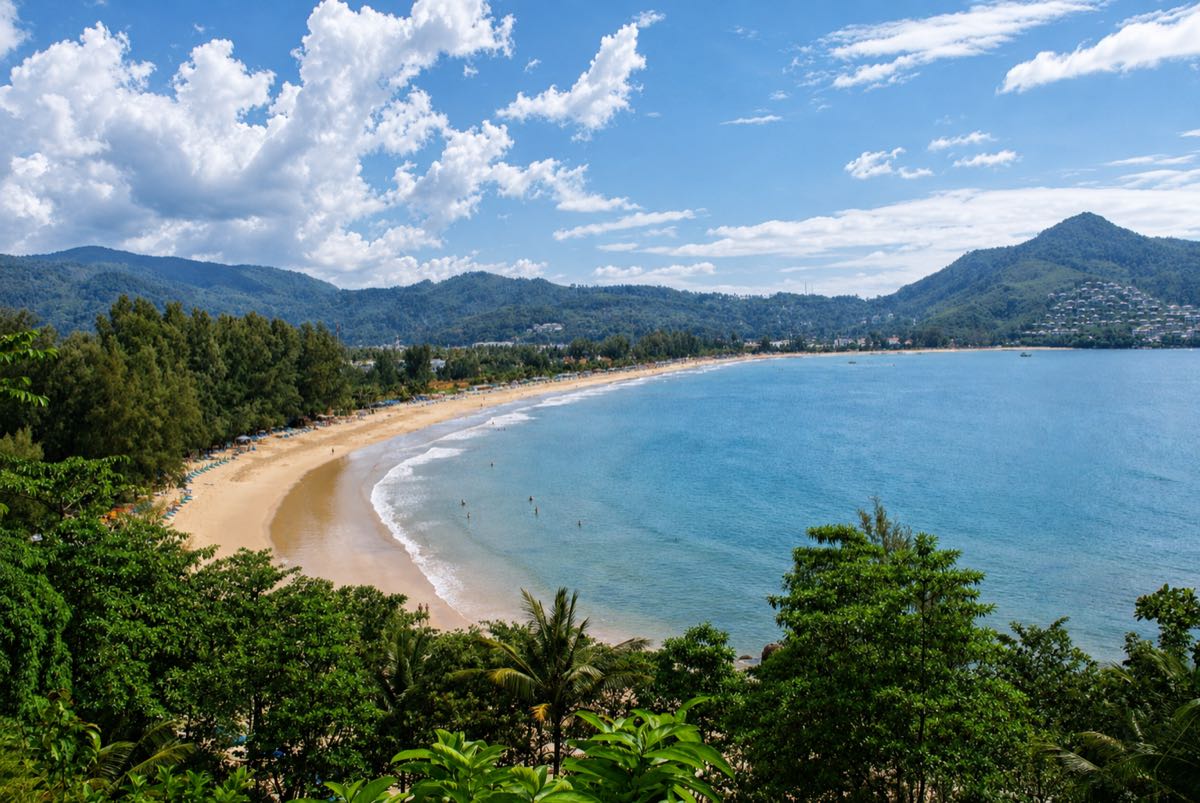
The question is usually asked as though it had one answer. It does not. Bangkok and Phuket give a foreign buyer exactly the same right to own a condominium outright, on exactly the same terms, and then diverge on everything that follows: what the stock is, what sits underneath it, and whether the purchase can be expected to earn. This is an honest comparison, as of August 2026, including the part we cannot measure.
- 49%
- foreign quota, both provincesFreehold condominium in a foreigner's own name, under the Condominium Act
- 30 years
- the typical Phuket villa leaseRegistered; renewal options worth what their wording says
- 3.7 to 4.1%
- Bangkok gross yield at askingCorridor medians, Sathorn to Riverside, Bangkok Price Index, July 2026
- 3 markets
- at least, wearing one name: PhuketManaged pool, private seasonal let, long lease to a resident
Ownership is identical, and that surprises people
Thai law does not care which province you buy in. A foreign buyer owns a condominium freehold in both.
Read the full explanation
Thailand’s Condominium Act does not care which province you buy in. A foreign buyer can hold a condominium unit freehold, registered in their own name, provided the building stays within its 49 percent foreign-ownership quota by saleable area. That is as true on Kamala Beach as it is on Wireless Road. Anyone telling you that island property is somehow a lesser form of ownership is describing villas, not condominiums. Our guide to what a foreigner can own in Thailand sets out the mechanics.
What a foreign buyer may own, by province
Wireless Road
Freehold condominium, registered in the buyer's own name, within the building's 49% quota.
Kamala Beach
The same. Freehold condominium, registered in the buyer's own name, within the building's 49% quota.
Tenure is where the two markets actually part
Bangkok sells apartments, so freehold is normal. Phuket sells villas on land, so leasehold is normal. The product decides it, not the place.
Read the full explanation
The difference is not the law. It is the stock. Bangkok’s market is overwhelmingly condominiums, so the quota route covers most of what a buyer would want, and the freehold question is usually settled before it is asked. Much of what draws people to Phuket is villas, and a foreigner cannot own land in Thailand in their own name. So a villa is typically a 30-year registered lease, sometimes with renewal options whose value depends entirely on their wording and on who holds the freehold underneath.
A 30-year lease is a 30-year lease. It can be the right answer, and often is, but it is a different asset from a freehold title and should be priced as one.
The clearest worked example on the island sits at Kamala Residences, where thirteen villas are offered as eight freehold and five leasehold at matching specification, which lets a buyer see what the two tenures cost against each other rather than argue about it in the abstract. The Phuket guide covers the shores and the projects in detail. Have the structure examined before the architecture.
Income: what we measure, and what we will not claim
We publish a Bangkok figure from our own index. We publish no Phuket yield at all, and we will tell you why.
Read the full explanation
For Bangkok we publish real numbers. The Bangkok Price Index is built from asking prices and asking rents we observe building by building across the central corridors, deduplicated, and it refuses to publish a corridor unless both sides carry at least twenty observations. As of July 2026 it puts gross yield at asking between 3.7 percent in Sathorn and 4.1 percent on the Riverside. That is the market-wide median, and on its own it under-describes what a buyer who chooses well can reach.
Split the same ledger by tenure and the range opens up. Across freehold buildings the median is 3.8 percent and the best reach 5.1. Across leasehold buildings the median is 6.2 percent, and five of the seven we can measure clear 6, with Sindhorn Kempinski at 7.8.
- Market-wide. 3.7 percent in Sathorn to 4.1 percent on the Riverside, gross at asking, July 2026.
- Freehold buildings. Median 3.8 percent, with the range reaching 5.1.
- Leasehold buildings. Median 6.2 percent; five of the seven measured clear 6, Sindhorn Kempinski at 7.8.
The reason is two prices moving in opposite directions: a leasehold residence sells for roughly a third less per square metre because the term is finite, while renting for more, because the leasehold stock on the park axis is prime, hotel-branded and serviced and a tenant pays for the address without pricing the tenure.
All of these are gross figures, before common fees, management, income tax, furnishing and vacancy, and a shorter term is a real cost that arrives when you sell rather than while you let. Selection is what moves a Bangkok purchase from the low threes to the high fives, and it is most of what we do.
Phuket: three markets wearing one name
A managed rental pool, a private seasonal let, and a long lease to a resident are three different businesses sold under one word.
Read the full explanation
For Phuket we quote one market range with its source, Knight Frank Thailand’s 2024 year-end figures of 5 to 8 per cent a year for condominiums and 10 to 15 for villas, before costs, and otherwise quote building by building. We publish no average of our own: on this coast the average is the wrong instrument. Bangkok is one homogeneous rental market with year-round tenants, which is why a corridor median means something.
Phuket is at least three markets wearing one name. A villa in a managed rental pool, a villa let privately by the season, and a condominium on a long lease to a resident behave nothing like each other, and the gap between high season and low is the whole argument. Average them and you get a number that describes no property anyone actually owns.
So we ask the operator for the building’s own occupancy and achieved rates, low season included, and we work from that. Where a developer or an operator will not produce it, that is itself the answer.
Projected and guaranteed-return figures are common in island marketing material, and a guarantee is a price concession wearing a yield’s clothing: it is funded out of the purchase price, and it ends. Ask us about a specific building on the coast and you will get its real numbers. Ask us for the island’s average and you will get Knight Frank’s range with its date, and why it describes no single building.
A guarantee is a price concession wearing a yield’s clothing: it is funded out of the purchase price, and it ends.
Comparing the price per square metre flatters whoever asks
The two are not measuring the same thing, so the comparison can be made to favour either side.
Read the full explanation
Central Bangkok trades as finished condominium floor area in a dense city. Phuket’s headline prices are usually villas, on land, with a pool and a sea view. Those are not the same product, and dividing either by its floor area produces a number that proves whichever case you started with. The useful comparison is the total cost of the thing you actually want, and what tenure sits underneath it.
So which one
It depends on whether you are buying a home to use or an asset to let, and the honest answer is different for each.
Read the full explanation
If the purchase has to earn, Bangkok, because it has a year-round tenant market and because we can show you what it currently asks. If the purchase is somewhere you intend to be, Phuket answers a question Bangkok does not, and the honest way to buy there is to settle the tenure first and treat any rental income as a bonus rather than a plan. Buyers who want both usually start with the Bangkok purchase, because it is the one that funds itself.
So which one
Bangkok
If the purchase has to earn. A year-round tenant market, and we can show you what it currently asks.
Phuket
If the purchase is somewhere you intend to be. Settle the tenure first; treat rental income as a bonus, not a plan.
We advise on both. Bangkok is where our own book and our own data sit; Phuket is a market we cover project by project rather than in aggregate, and we will tell you which of the two we think fits before you have committed to either.
