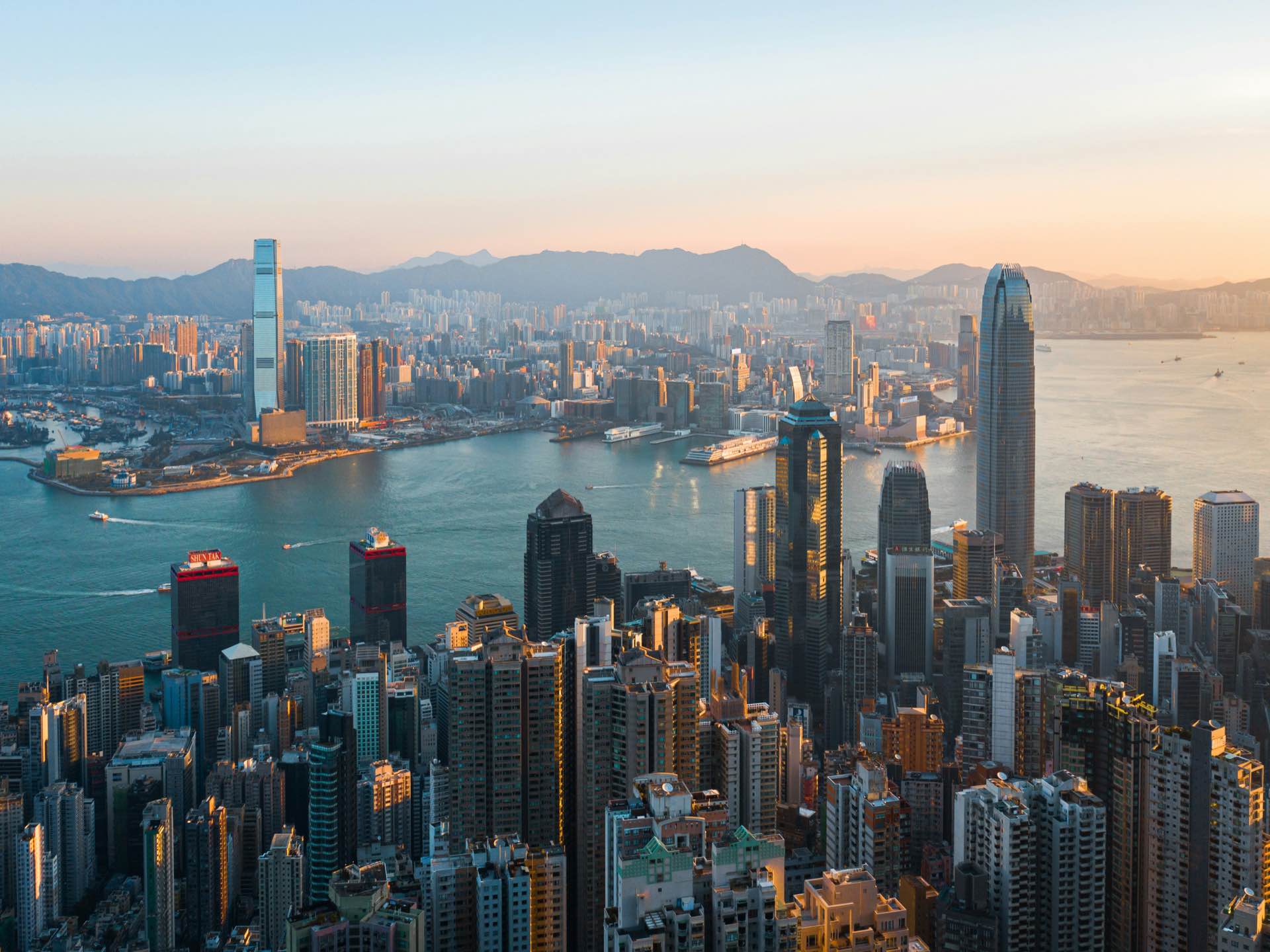
For a Hong Kong buyer weighing a Bangkok purchase, the comparison changed in 2024, when Hong Kong scrapped the extra stamp duties on non-resident buyers. The barrier to Bangkok was never really Hong Kong’s tax; it is Hong Kong’s price. Hong Kong offers a global financial hub, a US-pegged currency, and a deep market, at four to five times Bangkok’s price per square metre. The yield gap runs the other way, but it is modest rather than the doubling usually quoted. This is an honest comparison, as of 2026.
What changed in 2024
Until 2024, a non-permanent-resident buyer in Hong Kong faced a Buyer’s Stamp Duty of 15 percent on top of the ordinary rates. On 28 February 2024 the government removed it, along with the Special Stamp Duty and the New Residential Stamp Duty, in one move. A foreign or non-resident buyer in Hong Kong now pays the same Ad Valorem Stamp Duty as a local, at Scale 2 rates topping out at 4.25 percent. So the tax wall that once separated the two cities for foreign buyers is largely gone. What remains is the harder difference: price.
What a non-resident buyer pays in stamp duty in Hong Kong
Until 2024 · 15%
Buyer's Stamp Duty, on top of the ordinary rates.
Up to 4.25%
The same Ad Valorem Stamp Duty as a local, at Scale 2 rates.
Price and space
Hong Kong is among the most expensive residential markets in the world. Average residential prices sit around US$22,000 per square metre, and prime addresses in the Peak and Mid-Levels trade between roughly US$48,000 and US$83,000. Central Bangkok, by contrast, averages around US$4,200 to US$4,800 per square metre, with even prime branded stock a fraction of Hong Kong’s. The same budget buys several times the floor area in Bangkok, and at Hong Kong densities versus Bangkok’s, the difference in what that space feels like is larger still.
Average residential price, per square metre
Hong Kong · US$22,000
Prime addresses in the Peak and Mid-Levels trade between roughly US$48,000 and US$83,000.
Central Bangkok · US$4,200 to 4,800
Even prime branded stock is a fraction of Hong Kong's.
Yield
Bangkok yields more, but by less than the figures in circulation suggest. Our own Bangkok Price Index measures gross yield at asking across the four central corridors at 3.7 to 4.1 percent as of July 2026, computed from the asking prices and asking rents we observe building by building. Hong Kong sits at roughly 3.5 percent. But the market-wide median is the wrong number to compare, because it pools tenures: across freehold buildings the Bangkok median is 3.8 percent and the best reach 5.1, while across leasehold buildings it is 6.2 percent and five of seven clear 6. A well-chosen Bangkok residence beats Hong Kong comfortably; an average one barely does. All figures are gross, before common fees, management, income tax and vacancy.
Tenure
A structural difference sits underneath the prices. Residential land in Hong Kong is held on government leases, so ownership is leasehold by design, even for the most expensive homes. In Bangkok, a foreign buyer can own a condominium unit freehold, within the building’s 49 percent foreign quota. Our guide to what a foreigner can own sets out the Thai side.
Where Hong Kong is genuinely stronger
The honest case for Hong Kong is not about yield. It is a first-tier global financial centre with a currency pegged to the US dollar, a deep and liquid property market, common-law courts, and a concentration of wealth and business that Bangkok does not match. For a buyer who needs a hard-currency asset in a global hub, or whose life and business are already anchored in Hong Kong, those are real reasons a lower yield does not override. The Bangkok case is about freehold access, price, income, and lifestyle, not about replacing Hong Kong’s role.
Hong Kong dropped the tax wall in 2024. The price wall, four to five times Bangkok per square metre, is the one that remains.
Who should choose which
Choose Hong Kong if you need a hard-currency asset in a global financial hub and are buying for presence and preservation rather than income. Choose Bangkok if you want freehold ownership, several times the space for the money, and a materially higher rental yield, and are comfortable with a floating currency and a younger market. Many Hong Kong buyers we work with keep their base at home and add Bangkok for the income and the lifestyle. The practical side of a Bangkok purchase sits in our buyer’s guide, and the Singapore comparison runs here.